
Back to How Hyperbaric Oxygen Therapy Works
Mitochondrial Function and Hyperbaric Oxygen Therapy
How hyperbaric oxygen therapy (HBO2) supports mitochondrial function, cellular energy production, and quality-aging: biogenesis, fusion, ATP output, and cellular cleanup, explained in plain English.
Every cell in your body runs on energy made by mitochondria, and those power stations decline with age, illness, and injury. This report explains what hyperbaric oxygen treatment does at the mitochondrial level, what the published studies actually measured, and where the honest limits of that evidence sit.
Report 1 of 4, Mechanisms of Action series, Hyperbaric Health Services St. Augustine. 100% medical grade oxygen, up to 3.0 ATA.
The Series: How Hyperbaric Oxygen Therapy Works, Four Mechanisms of Action
Hyperbaric oxygen therapy does not work by one single trick. Breathing 100% medical grade oxygen under pressure sets off a chain of biological responses, and researchers group them into four main mechanisms of action: it helps cells build and maintain their mitochondria, it grows new blood vessels (angiogenesis), it mobilizes stem cells from the bone marrow, and it calms excess inflammation. Each mechanism has its own detail report in this series, written in the same format, with the same plain English first approach and the same honest account of the evidence. This page is the mitochondrial report.
Report 1: Mitochondrial Function. How HBO2 prompts cells to build new mitochondria, fuse them into stronger networks, produce ATP more efficiently, and clear out worn-out units. You are reading this report.
Report 2: Angiogenesis. How the oxygen swing of HBO2 switches on VEGF and HIF signaling so tissue grows new capillaries and restores blood flow.
Report 3: Stem Cell Mobilization. How HBO2 uses nitric oxide to release CD34+ stem and progenitor cells from the bone marrow into the blood.
Report 4: Inflammation Reduction. How HBO2 dials down pro-inflammatory cytokines and excess immune activity, helping stalled, inflamed tissue heal.
Contents
1. The Short Version
2. What Happens in the Chamber
3. The Mechanism in Detail
4. What the Evidence Shows
5. What This Means for Patients
6. Honest Limits
7. Why This Matters for Quality-Aging
8. References
Section 1: The Short Version
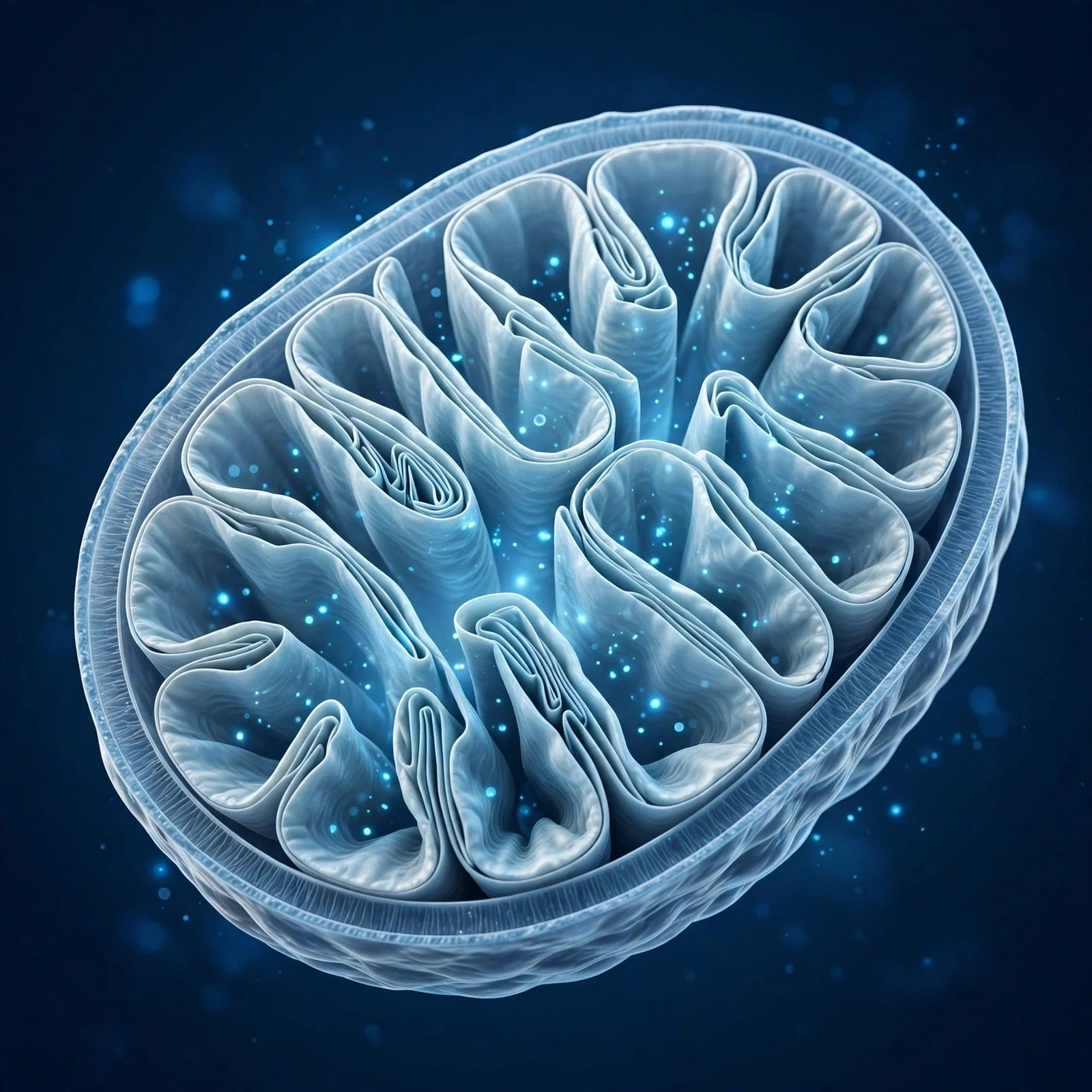
Mitochondria are the power stations inside almost every cell you have. They take oxygen and fuel from food and turn them into ATP, the energy currency that pays for everything a cell does: contracting a muscle, firing a neuron, building collagen, fighting infection, repairing damage. A young, healthy cell carries a large fleet of well maintained mitochondria. With age, chronic inflammation, metabolic stress, and poor circulation, that fleet shrinks and the remaining units run rough. Energy output falls, and the tissues with the highest energy bills, brain, heart, muscle, and healing wounds, feel it first.
Hyperbaric oxygen therapy, HBO2 for short, is best known for forcing extra oxygen into the blood. Its deeper effect is a training signal for mitochondria. A treatment floods the body with oxygen under pressure, and then, when the session ends and oxygen levels settle back to normal, the cell reads that drop as a mild shortage and responds the way it would to exercise: it builds new mitochondria, links them into stronger networks, tunes up the machinery that makes ATP, and hauls away the broken units for recycling.
The one-sentence version: HBO2 does not just deliver more oxygen for an hour or two. A course of treatments persuades your cells to upgrade the power stations that use oxygen for the rest of the day.
That is the claim. The rest of this report walks through how it is thought to work, what studies in people actually measured, including the numbers, and what remains unproven. Some of this is established physiology, some is promising early research, and the report labels which is which as it goes.
Section 2: What Happens in the Chamber
At Hyperbaric Health Services St. Augustine, treatment takes place in a Perry Sigma 34 chamber, a medical grade, FDA 510(k) approved chamber with an ASME PVHO stamp. You do not climb into anything. You are settled on a comfortable bed and rolled in, and you watch a large screen TV mounted outside the clear acrylic while you rest. A typical session runs close to two hours.
Inside, three things change at once:
100% medical grade oxygen
Instead of ordinary air, which is about 21% oxygen, you breathe pure medical grade oxygen for the treatment. Every breath carries roughly five times the oxygen of a normal breath before pressure is even counted.
Pressure up to 3.0 ATA
The chamber pressurizes to a prescribed level measured in atmospheres absolute, or ATA. Sea level is 1.0 ATA. Many protocols in the studies behind this report used 2.0 to 2.5 ATA, and our chambers are rated to 3.0 ATA when a physician's prescription calls for it.
Oxygen dissolves into blood plasma
Under pressure, oxygen stops depending on red blood cells alone. By Henry's law, gas dissolves into liquid in proportion to pressure, so oxygen dissolves directly into the blood plasma itself. Plasma that carries about 0.3 mL of dissolved oxygen per 100 mL at sea level can carry roughly 6 mL per 100 mL at 3.0 ATA, about twenty times more, and arterial oxygen pressure climbs above 1,500 mmHg at typical treatment pressures. Plasma reaches places red blood cells struggle to reach, including tissue with damaged or narrowed circulation.
Air breaks create the swing
During treatment you take short breaks breathing ordinary air. Those planned dips, and the bigger drop when the session ends, are part of the therapy, not an interruption of it. The rise and fall of oxygen is the signal the next section is about.
While you are in the chamber, tissues simply have far more oxygen to work with, and mitochondria can run their production lines without waiting on supply. The lasting story, though, is what the oxygen swing sets in motion after you leave.
Section 3: The Mechanism in Detail
Five connected processes explain how a course of HBO2 changes the mitochondrial fleet. They build on each other. One process makes new units, the next connects them, the next makes them produce more ATP, and the last two are quality control: managing the reactive oxygen species that production creates, and clearing out units that are beyond repair.
3.1 Mitochondrial biogenesis: building new power stations
The trigger is a puzzle with a name: the hyperoxic-hypoxic paradox, described by Hadanny and Efrati in 2020. A treatment raises the oxygen around cells far above normal. A short time later, oxygen levels fall back toward normal, and the cell reads that fall as if oxygen were now scarce. The fall, not the flood, flips the switch.
The hyperoxic-hypoxic paradox: the swing, not just the peak, is the signal.
The master switch for construction is a protein called PGC-1a (peroxisome proliferator-activated receptor gamma coactivator 1-alpha), which reads the swing and turns on the genes that build mitochondria. The trigger is a transcription factor called HIF-1a, which builds up when oxygen is read as low, and which then calls for the production of PGC-1a. Once PGC-1a is active, it switches on a team of downstream regulators: NRF-1 and NRF-2 (nuclear respiratory factors, not the same as Nrf2, which appears in section 3.4) and TFAM (mitochondrial transcription factor A). Together they drive two kinds of building at once: making new mitochondrial proteins from nuclear DNA, and copying mitochondrial DNA itself.
The result is the literal construction of new mitochondria, and, because the new units are made to order, they arrive with the machinery to produce ATP from day one.
3.2 Fusion dynamics: stronger networks, not fragments
Mitochondria are not the static beans in textbook drawings. They constantly merge (fusion) and split (fission). Fusion pools the contents of two units so a damaged one can borrow healthy copies of DNA and proteins from its neighbor. Fission does the opposite: it cuts off a damaged part so it can be removed. Healthy cells need both, in balance.
Oxygen under pressure shifts the balance toward fusion. The joining is done by named proteins: MFN1 and MFN2 (mitofusins 1 and 2) stitch the outer membrane, and OPA1 (optic atrophy 1) stitches the inner membrane. When the swing makes those proteins more active, mitochondria become longer, more connected, and more efficient. That matters because the fused network shares fuel and spreads the load: a mitochondrion that can draw on the whole network's resources produces more ATP than the same unit isolated.
3.3 The electron transport chain and ATP yield
More mitochondria, better connected, still have to perform. ATP is made on the inner mitochondrial membrane by the electron transport chain, a series of five protein complexes, and the oxygen supply is what drives it. The chain hands electrons down from complex to complex, pumping protons across the membrane as it goes. That pumping creates a gradient, like water behind a dam, and the return flow of protons through ATP synthase (Complex V) is what turns ADP into ATP.
Oxygen is the final electron acceptor at Complex IV, cytochrome c oxidase. When oxygen supply is the limit, the chain stalls and ATP output falls. When oxygen is plentiful, electrons flow to the end of the chain and ATP production runs at full capacity. HBO2 supplies that oxygen, but the lasting gains come from the number and condition of the mitochondria themselves. A bigger, better connected fleet with more cristae can run more ATP production per cell, even at normal oxygen levels after the course ends.
In a study of older men who received 60 sessions of HBO2, markers of mitochondrial mass and efficiency improved in the muscle, a finding that lines up with the gains in maximal oxygen use seen in the athlete trial in section 4.
3.4 ROS signaling: calibration, not overload
Reactive oxygen species, or ROS, have a bad reputation, and at high, sustained levels they earn it: they damage proteins, fats, and DNA. But the body also uses small, controlled bursts of ROS as a signal to repair itself. The ROS burst during HBO2 is a small, timed pulse, not a flood, and that pulse triggers a defensive response that lowers oxidative stress for hours afterward.
That defensive response runs through a separate regulator, Nrf2 (not to be confused with NRF-2 in section 3.1). Nrf2 responds to the ROS signal by switching on the production of antioxidant enzymes, including superoxide dismutase and glutathione peroxidase. Those enzymes disarm ROS before they can damage the cell. It is the same response that exercise produces: a short period of stress leaves the body better defended than before. Put simply, HBO2 does not just add oxygen. It trains the cell's antioxidant defenses the way exercise trains a muscle.
3.5 Mitophagy: taking out the broken units
Building new mitochondria while broken ones linger would be half a job. Cells run a quality control program called mitophagy that identifies failed mitochondria and recycles them. A healthy mitochondrion holds its membrane potential. A damaged one loses it, and that loss is the tag: a protein called PINK1, which is normally imported and destroyed, accumulates on the surface of the depolarized organelle instead. PINK1 recruits a second protein, Parkin, which marks the unit for disposal, and the cell's autophagy machinery engulfs and digests it.
HBO2 supports this turnover from both ends. The ROS and energy signals of treatment help expose the units that can no longer hold a charge, and the biogenesis program of section 3.1 replaces what cleanup removes. The fleet that results is not just bigger. It is younger on average, with fewer exhausted, leaking mitochondria dragging down the whole cell's chemistry.
Section 4: What the Evidence Shows
Here is the human evidence most relevant to mitochondria, stated with its real numbers and its real limits.
40 sessions: Blinded, sham controlled trial in master athletes, with muscle biopsies (Hadanny 2022)
p = 0.0002: Statistical strength of the rise in the mitochondrial mass marker after HBO2 versus sham
Over 20%: Telomere lengthening measured in immune cells after 60 sessions (Hachmo 2020)
63 adults: Randomized controlled trial of cognition in healthy adults over 64 (Hadanny 2020)
Mitochondrial respiration and performance in athletes (Hadanny et al., 2022)
Sports Medicine Open. Double blind, randomized, sham controlled. 37 healthy master athletes, 40 sessions.
Athletes received 40 sessions of either real HBO2 (2.0 ATA, 100% oxygen, one hour) or a sham treatment that looked and felt the same. Biopsies of leg muscle were taken before and after the course. The result: mitochondrial mass rose in the HBO2 group by 37.7% (p = 0.0002 versus sham), the maximal respiratory capacity of the muscle increased, and the athletes' maximal oxygen consumption (VO2max) and oxygen use at the anaerobic threshold improved as well. That is the closest thing to a direct mitochondrial finding in humans.
Telomeres and senescent immune cells (Hachmo et al., 2020)
Aging (Albany NY). Prospective trial. 35 healthy adults aged 64 and older, 60 daily sessions.
This is the landmark study from our flagship quality-aging paper: the first study of its kind in humans. Thirty-five adults enrolled and thirty completed 60 daily HBO2 sessions. Telomeres, the protective caps on chromosomes that shorten until a cell can no longer divide, lengthened significantly by over 20% in T helper, T cytotoxic, natural killer, and B cells. B cells showed the largest change, up 37.6% one to two weeks after the course ended. Senescent cells, worn out cells that have stopped dividing and stir up inflammation around them, fell sharply: senescent T helper cells down 37.3%, and senescent T cytotoxic cells down 11.0%. The honest framing: these were blood immune cells, not muscle or brain mitochondria, and telomere change is a marker of cellular aging, not a direct mitochondrial measurement. It belongs in this report because immune cells that can still divide are how the body defends itself, and defending well is a mitochondrial energy story too.
Cognition in healthy older adults (Hadanny et al., 2020)
Aging (Albany NY). Randomized controlled trial. 63 healthy adults over 64, 60 sessions over three months.
Adults were randomized to HBO2 (33 people) or an untreated control group (30 people). After the course, the treated group improved significantly in global cognitive function compared with controls (group by time interaction, p = 0.0017). The largest gains were in attention (net effect size 0.745) and information processing speed (net effect size 0.788), two abilities that normally decline with age, and perfusion MRI showed increased cerebral blood flow in the treated group. Brain tissue uses about 20% of the body's oxygen, so a brain result matters to a mitochondrial report. But be precise: this trial measured thinking and blood flow, not mitochondria themselves. It is supporting evidence, not proof of the mechanism.
The paradox at the cellular level (Balestra et al., 2024) and animal work
International Journal of Molecular Sciences. Human blood cell pilot study, with supporting animal research.
In a pilot study of human peripheral blood cells, pulsed high oxygen exposure moved PGC-1a into the cell nucleus, the first step of the biogenesis program in section 3.1, at every oxygen dose tested. Interestingly, the follow through step, release of the mitochondrial transcription factor TFAM, appeared only after the mildest exposure. That is a useful dose lesson: more oxygen is not automatically a stronger build signal, and protocol design matters. Animal studies fill in the rest of the pathway. In rats, a single mild hyperbaric session raised PGC-1a gene expression in skeletal muscle while leaving enzyme activity unchanged, consistent with biogenesis being a course effect rather than a one session effect (Fujita et al., 2016).
Reading this evidence fairly
The direct mitochondrial evidence in humans rests mainly on one small blinded athlete trial with biopsies, plus a pilot of blood cells, plus animal work. The larger human trials tell a supportive story about telomeres, cognition, and blood flow, but they do not directly prove the mitochondrial mechanism. The evidence is promising, and it is also early, and it would be wrong to present it any other way.
Section 5: What This Means for Patients
Patients do not experience mitochondria. They experience what mitochondria make possible. Translated into everyday terms, a healthier mitochondrial fleet is likely to mean:
Energy and stamina. The athlete trial's gains were measured as VO2max and oxygen use at the anaerobic threshold. In daily life, that kind of gain is the difference between fading by the afternoon and having something left in the tank.
Mental clarity. The cognition trial's largest gains were attention and information processing speed: following a conversation, keeping track of a task, and thinking without the fog that so many older adults describe.
Recovery and repair. Healing is energy expensive work. Tissue that can produce ATP reliably has the fuel to rebuild, which is why the same mitochondrial story shows up in wound healing studies.
Defensive capacity. Immune cells must divide to defend you. The telomere results speak to keeping that capacity staffed and ready.
Patient reported outcomes follow the same pattern as the measured ones: people most often describe stamina, clarity, and recovery, not a number on a blood test. That is what you would expect if the mechanism is energy, not a single biomarker.
Every patient at our clinic is screened and treated under physician oversight. Our medical director, Dr. Gregory Shumer, reviews each patient's history before a course begins.
Section 6: Honest Limits
This clinic's position, and the position of our flagship quality-aging paper, is that patients deserve the full picture, including the parts that are still unproven. Those limits are:
Quality-aging use is off-label. Hyperbaric oxygen is cleared for a defined list of medical indications, such as problem wounds, radiation injury, and carbon monoxide poisoning. Quality-aging is not one of them. The FDA has not approved HBO2 as an anti-aging treatment, and that is exactly why it is elective. Patients choose it with informed consent, after their physician discusses the evidence and the alternatives. That choice is different from a prescription for a covered indication.
No guarantees. Individual responses vary. Some people notice a great deal, some notice little, and no honest clinic can predict in advance which group you will be in. Your baseline health, the state of your mitochondria before treatment, and your other health habits all change the result.
No claims about living longer. The studies measured telomeres, cognition, blood flow, and muscle mitochondria. None of them measured lifespan, and this clinic makes no claim that HBO2 extends it. We focus on the quality of the years you have, not the number.
The evidence is early and concentrated. Small trials, short follow up, and a literature led largely by one research group mean the findings should be treated as promising, not proven. Larger trials, with longer follow up and independent replication, are what will turn these early signals into settled knowledge.
Treatment has real risks, which screening manages. The most common side effect is ear pressure discomfort or barotrauma. Less common risks include temporary vision changes (myopia), oxygen toxicity, and, rarely at clinical pressures, oxygen toxicity seizures. Diabetes medications and blood sugar need attention during a course. This is medical treatment, delivered in a medical grade chamber by trained staff under physician oversight, and that is exactly why.
Dose matters. The cellular research shows the build signal does not simply grow with more pressure or more oxygen. Soft sided home chambers at low pressure are not the intervention these studies tested, and results cannot be assumed to transfer.
Section 7: Why This Matters for Quality-Aging
We do not use the language of reversing age, and we do not sell youth. Our term is quality-aging: staying capable, clear, and resilient for the years you have. Mitochondria sit near the center of that goal, because so much of what declines with age is, underneath, an energy problem. Muscles weaken as their mitochondrial fleet thins. Thinking slows in a brain that spends a fifth of the body's oxygen. Wounds stall when the cells rebuilding them cannot pay the energy bill. And when telomeres run out, a cell cannot divide at all, which means immune cells that cannot divide cannot defend against disease. HBO2 does not prevent disease. It supports the cellular machinery that fights it, and more disease fighting capacity, sustained for longer, is what quality aging actually looks like.
That is also why this clinic does one thing. We do not chase every trending modality. We run medical grade hyperbaric oxygen, properly screened, properly dosed, under physician oversight, and we put our name on the evidence as it stands, limits included. If the mitochondrial story in this report is right, and the early evidence says it is promising, then a course of HBO2 is one of the few interventions that speaks directly to the cell's ability to make energy, repair itself, and keep showing up. Elective treatment for quality-aging is a patient's informed choice to make, with a physician's guidance. Our job is to make sure the information behind that choice is honest.
The other three reports in this series complete the picture: angiogenesis, the growth of new blood vessels; stem cell mobilization, the release of repair cells from the marrow; and inflammation reduction, the calming of stalled, inflamed tissue.
Section 8: References
1. Hadanny A, Efrati S. The hyperoxic-hypoxic paradox. Biomolecules. 2020;10(6):958. PMC7355982
2. Hadanny A, Hachmo Y, Rozali D, et al. Effects of hyperbaric oxygen therapy on mitochondrial respiration and performance in master athletes. Sports Medicine Open. 2022;8:22. doi:10.1186/s40798-021-00403-w
3. Hachmo Y, Hadanny A, Abu Hamed R, et al. Hyperbaric oxygen therapy increases telomere length and decreases immunosenescence. Aging (Albany NY). 2020;12(22):22445-22456. PMC7746357
4. Hadanny A, Daniel-Kotovsky M, Suzin G, et al. Cognitive enhancement of healthy older adults using hyperbaric oxygen therapy. Aging (Albany NY). 2020;12(13):13740-13761. PubMed 32589613
5. Balestra C, et al. Pulsed hyperoxia acts on plasmatic advanced glycation end products and advanced oxidation protein products. International Journal of Molecular Sciences. 2024;25(4):2394. PMC10889761
6. Fujita N, Tomioka T, Ono M, Deie M. Acute influence of mild hyperbaric oxygen at 1.25 atmospheres absolute on mitochondrial function in skeletal muscle. Biomedical Research and Clinical Practice. 2016;1(3).
7. Hyperbaric oxygen therapy improves Parkinson's disease by promoting mitochondrial biogenesis via the PGC-1a pathway. Biomolecules. 2022;12(5):661.
8. Alvarez Villela M, Dunworth SA, Kraft BD, et al. Effects of high-intensity interval training with hyperbaric oxygen therapy on mitochondrial function. Frontiers in Physiology. 2022;13:963799. PMC9437248. HBO2 added to training raised PPARGC1A expression without adding VO2peak benefit over training alone.
9. Adapted and expanded from the clinic's earlier explainer: The Effect of Hyperbaric Oxygen on Mitochondria, Hyperbaric Health Services St. Augustine. Reframed to this clinic's quality-aging guidance: no claims about lifespan, no promise of outcomes.
Hyperbaric Health Services St. Augustine
150 Southpark Blvd, Suite 102, St. Augustine, FL 32086. (904) 342-5002. hyperbaricstaugustine.com
Report 1 of 4, Mechanisms of Action of Hyperbaric Oxygen Therapy series. Prepared by Mitch Hall, D.O. This report is educational information about the mechanisms of hyperbaric oxygen therapy. It is not medical advice. Talk with your physician before starting any treatment.